
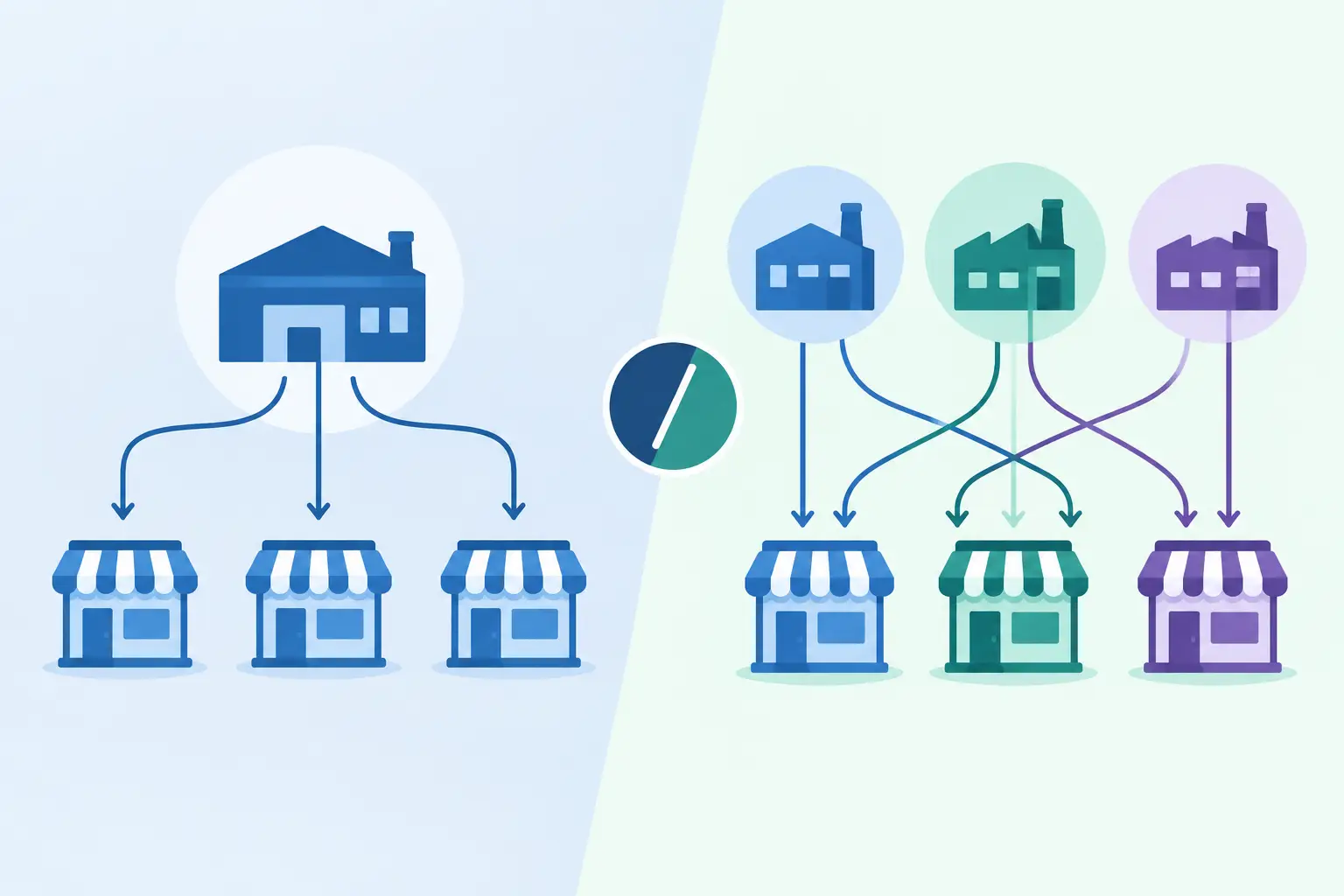
A distributor can put a credible technology in front of hundreds of resellers and still fail to create a single meaningful UK opportunity. The question of exclusive distribution versus multi vendor is therefore not a procurement detail. It determines how much commercial attention your product receives when sales teams are prioritising, channel managers are recruiting partners and marketing budgets are being assigned.
For an overseas cyber security, networking or SaaS vendor, the decision is particularly consequential. UK buyers have choice, resellers guard their time, and security portfolios are crowded. Distribution only produces value when it creates attention, confidence and qualified pipeline. The right model depends on your market position, product maturity and the level of control you need over your route to market.
Exclusive distribution versus multi-vendor: the real difference
Multi-vendor distribution is built for breadth. A distributor carries numerous technologies, often across overlapping categories, and gives resellers a consolidated purchasing route. That scale can be useful. A large catalogue, existing account base and established logistics or credit facilities may help an already recognised vendor extend availability quickly.
Exclusive distribution is built for focus. The distributor represents a defined vendor or technology category without carrying a competing product line. Its commercial team has a clearer reason to lead with the solution, qualify where it fits and build a channel strategy around it. Rather than being one option among several, the vendor becomes a product the distributor is accountable for growing.
This distinction matters because channel sales are not passive. A reseller will rarely invest in training, demonstrations, proof-of-value activity and customer conversations simply because a product appears on a line card. Someone must identify suitable partners, create demand, progress opportunities and keep deals moving. That requires committed sales resource, not catalogue presence.
The appeal and limits of a multi-vendor model
A multi-vendor distributor can offer immediate reach. If your priority is transactional coverage, broad reseller availability or access to a mature base of buying partners, the model may be a sensible fit. It can also work well where your product is already specified by end users, has strong brand pull or complements a distributor’s existing portfolio without creating a close conflict.
The problem arises when a vendor needs market creation rather than order fulfilment. In a busy portfolio, account managers naturally favour the product that is easiest to sell, carries the strongest existing demand or offers the most familiar commercial path. If several vendors address endpoint security, backup, network visibility or web performance, your technology may be positioned as an alternative rather than the preferred answer.
That does not mean multi-vendor distribution is inherently weak. It means vendors must be realistic about the attention available. Ask how many competing products sit in the same category, who owns revenue responsibility for your line, how often the team actively prospects, and whether opportunities are registered and managed through to closure. A sizeable channel database is not the same as an active go-to-market engine.
Multi-vendor models can also complicate channel messaging. Resellers want to know why they should commit time to another security tool or SaaS platform. If the same distributor can switch its recommendation to a competing product, the vendor’s position becomes less distinct. That uncertainty can slow recruitment and undermine the confidence required to build a specialist partner base.
What exclusivity changes in practice
Exclusive distribution creates a sharper commercial contract. The distributor is not merely able to sell the product. It has a direct incentive to make the product win. Its sales hunters can target the right prospects without internally diverting deals to a comparable technology. Its channel managers can recruit resellers around a focused proposition, while marketing activity can build a consistent narrative in the market.
For vendors entering the UK without a local office, this can feel much closer to an embedded commercial team. Instead of funding a full UK entity before demand is proven, the vendor gains local sales coverage, channel development, product management and demand generation under one growth plan. The distributor becomes responsible for turning a credible technology into UK traction.
There is a channel benefit too. Partners are more likely to engage when the distributor can articulate a clear opportunity and protect their investment in enablement. Exclusivity does not remove the need for good margins, responsive technical support and a compelling product. It does remove a common source of doubt: whether the distributor will promote a rival solution next week.
Wise Distribution operates from this principle. Its zero-conflict approach means it does not represent competing technologies, giving each vendor laser-beam focus rather than a place in an overcrowded catalogue.
Exclusivity is not a shortcut
An exclusive agreement only works when both parties bring commitment. Vendors should not award exclusivity in return for a logo, a launch announcement and vague forecasts. Equally, distributors cannot be expected to build a market without product readiness, accessible technical resource, competitive pricing and senior-level engagement.
The risk for a vendor is concentration. If the chosen distributor lacks sales capability, fails to recruit suitable resellers or does not report activity transparently, exclusivity can limit options rather than accelerate growth. The remedy is not automatically to appoint more distributors. It is to set measurable expectations before the agreement begins.
A serious exclusive arrangement should define the target market, ideal customer profile, priority verticals, reseller profile, sales stages and planned demand-generation activity. It should also establish regular pipeline reviews and sensible performance milestones. These give both sides an early warning if positioning, enablement or partner selection needs to change.
The risk for the distributor is equally clear. Selling one vendor in a category demands confidence that the technology can compete and that the vendor will support the field. Strong exclusivity is earned through mutual execution, not promised through contract wording alone.
How to choose the right UK distribution model
Start with the commercial job that needs doing. If you have recognised demand, an established UK partner network and buyers already asking where to purchase, broad multi-vendor availability may deliver value. Your challenge is likely coverage and transaction efficiency.
If your challenge is creating awareness, winning the first reference customers, building a specialised reseller community and generating opportunities from scratch, focus should rank above breadth. An exclusive distributor with direct sales hunting and channel-building capability is usually better aligned to that task.
Then examine product overlap with precision. A distributor might claim your technology is complementary, yet its portfolio may include products that solve the same customer problem through a different route. Ask how a salesperson would position your solution against every adjacent line. If the answer is vague, the conflict is real even if the category labels differ.
Assess the operating model, not just the brand name. Useful questions include:
- Who will prospect for new opportunities rather than wait for reseller requests?
- How will suitable UK resellers be identified, recruited and enabled?
- Which campaigns will create demand, and how will response be qualified?
- Who owns deal progression from first conversation to signed order?
- What reporting will show activity, pipeline value, conversion and blockers?
These questions expose the difference between a distributor that can process business and one that can create it. For a vendor with limited local presence, the latter is often the more valuable capability.
The commercial metrics that make exclusivity accountable
Revenue matters, but it is a lagging indicator during market entry. Early measures should show whether the growth engine is being built: target-account engagement, qualified leads, first meetings, recruited active resellers, partner enablement, proofs of concept, registered opportunities and pipeline progression.
Targets need to reflect the sales cycle. Enterprise cyber security deals may take longer than a lower-value SaaS purchase, while a technical product may require demonstrations and validation before a reseller will take it to customers. A distributor that understands the category will distinguish between superficial lead volume and real buying intent.
Transparency is central. Vendors should see what is being done, what is converting and where the friction sits. Perhaps a proposition is attracting interest but pricing is blocking progress. Perhaps the wrong reseller type is being recruited. Perhaps the market needs a stronger use case for managed service providers. Clear data allows the plan to be adjusted quickly rather than allowing a quiet quarter to become a lost year.
Focus wins when the market needs building
There is no universal winner in exclusive distribution versus multi-vendor distribution. Broad portfolios suit vendors seeking scale, availability and a transactional route through an established market. Focused representation suits vendors that need an active UK growth function, clear channel positioning and a team prepared to hunt for new business.
The useful test is simple: do you need another route to order, or do you need a committed route to market? If the priority is to build UK pipeline rather than simply appear on a price list, choose the partner whose incentives, sales activity and portfolio focus make your growth impossible to ignore.