
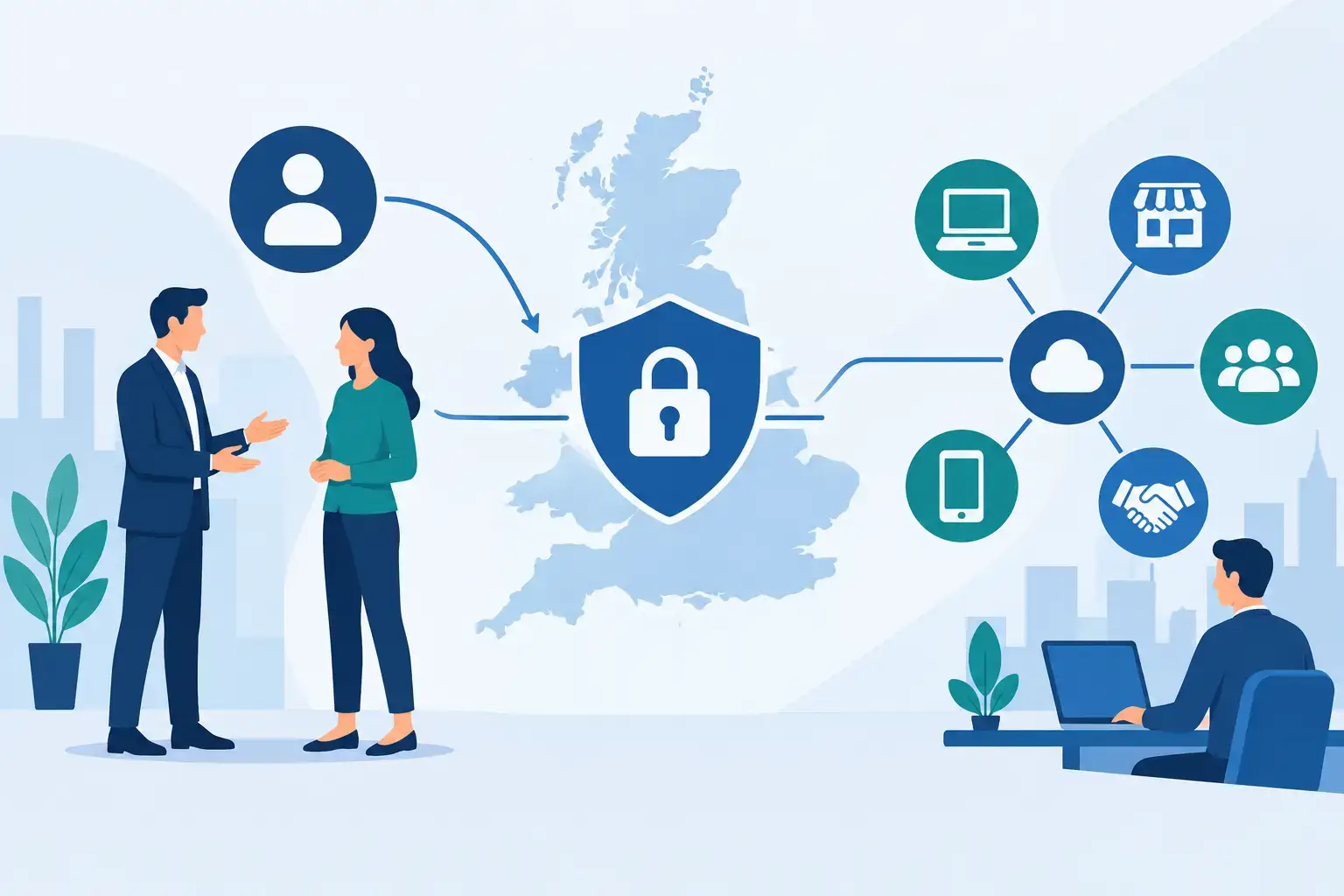
A credible cyber security product can still fail to gain commercial traction if its route to market is wrong. The debate around direct selling versus channels is not about choosing between two sales tactics. It is a decision about market coverage, control, speed, cost and the kind of customer relationships a vendor needs to build in the UK.
For overseas vendors, the most effective answer is rarely direct-only or channel-only. Direct activity creates demand, uncovers opportunities and sharpens the message. A well-managed channel scales reach, brings trusted customer relationships and makes a technology easier to buy. The commercial advantage comes from knowing where each motion belongs and making both accountable for revenue.
Direct Selling Versus Channels: The Real Commercial Difference
Direct selling means the vendor, or a dedicated local sales function, identifies target accounts, opens conversations, qualifies needs and works opportunities towards closure. It gives the vendor direct access to customer feedback, buying triggers, competitive intelligence and deal economics.
This matters particularly for technologies that require education. A prospect may understand endpoint detection and response, but not yet see why it needs an extended detection and response strategy. A security team may have a vulnerability scanner, yet lack a clear picture of which external exposure can genuinely be exploited. For a platform such as Armory Defence, which uses Adversarial Exposure Validation to test exposure from an attacker’s perspective, that distinction is central to the sale. It often takes focused discovery and a commercial narrative tailored to the organisation’s risk position.
Channel selling uses resellers, managed service providers, systems integrators and specialist consultancies to take the solution to market. Their value is not simply more logos on a partner list. The right partners hold customer trust, understand local procurement habits and can combine a product with services, implementation and managed support.
The trade-off is control. A direct team can prioritise one product all day. A reseller carries multiple priorities and will normally lead with the solution that is easiest to understand, easiest to transact and most likely to generate service revenue. Vendors that expect passive channel recruitment to create sales will be disappointed.
When Direct Sales Should Lead
A direct-first approach is strongest when a vendor needs to establish a category, prove a message or win named strategic accounts. It is also valuable where the sale involves multiple stakeholders across security operations, IT, procurement and executive leadership.
Take an XDR or network detection and response conversation. The customer may need to understand how richer telemetry, investigation workflows and response capability fit alongside existing tools. That is not a price-list transaction. It needs a sales hunter who can create urgency, expose gaps and build consensus around a practical outcome.
Direct activity is also the fastest way to learn whether the UK message is landing. If prospects repeatedly ask the same question, if a competitor appears in every opportunity, or if a claimed differentiator does not change buying behaviour, the vendor receives the evidence quickly. That feedback should influence product positioning, campaign themes, partner enablement and the ideal customer profile.
However, direct selling has limits. Building a local team is expensive, and a small number of account executives cannot provide national coverage or meet every customer preference. Many buyers want to procure through an established partner that can supply a wider solution, manage deployment and remain available after the initial project. Insisting on a direct transaction can introduce unnecessary friction.
When the Channel Should Lead
The channel is usually the better primary route where a technology complements services already delivered by partners. Phishing defence is a clear example. Cofense can become more valuable when a managed security provider integrates phishing reporting, response workflows, awareness activity and remediation into an ongoing service. The partner has a reason to lead the conversation because the technology supports its own commercial model.
The channel also accelerates access to mid-market organisations, where trusted local advisers frequently shape technology decisions. Rather than building every relationship from zero, a vendor can equip the right partners with a clear use case, target profile, commercial proposition and support for early opportunities.
Yet more partners does not automatically mean more revenue. A broad-line distributor may have thousands of reseller accounts, but a new vendor can easily become one more line in an overcrowded catalogue. Little changes unless someone recruits the right partners, enables them properly, co-sells early deals and keeps momentum high.
That is why quality beats quantity. A focused group of partners with a clear customer fit, a defined service proposition and active deal support will outperform a long list of inactive registrations. Channel development is a sales discipline, not an administrative exercise.
The Strongest Model: Direct Demand, Channel Scale
For many cyber security vendors entering the UK, the most commercially effective approach is a coordinated hybrid model. Direct sales creates pipeline and develops strategic opportunities. Channel partners extend reach, add services and provide the customer’s preferred buying route. Neither motion is left to chance.
The sequence matters. First, define the accounts, sectors and threat-led use cases where the product has the strongest commercial advantage. Then run direct outreach and digitally led campaigns to generate informed conversations. Bring suitable partners into live opportunities early, rather than asking them to promote an unfamiliar product before they have seen customer demand.
This makes partner recruitment more credible. A reseller is far more likely to commit time when it sees a qualified opportunity, a compelling business case and a vendor team willing to work alongside it. Co-selling also gives the vendor a chance to observe how the partner positions the product, where enablement is needed and whether the relationship has genuine growth potential.
Wise Distribution operates around this principle: direct hunters, channel managers and demand generation work as one UK growth function. The aim is not to compete with partners for the transaction. It is to create the opportunity, build the route to market and help the right partner win it.
Avoiding the Conflict That Damages Channel Trust
The biggest danger in a hybrid model is channel conflict. If partners believe a vendor or distributor will use their customer intelligence to take deals direct, they will protect their accounts and stop investing. If the vendor allows multiple competing technologies into the same proposition, the message becomes blurred and partner attention weakens.
Clear rules prevent this. Deal registration must be transparent. Account ownership should be agreed early. Direct sales should support partner-led transactions rather than bypass them, unless there is a defined strategic reason and all parties understand the engagement model. Commercial terms need to reward the partner for adding value, not merely placing an order.
Product focus matters too. A distributor that never sells a competing technology can give each vendor a stronger commercial commitment. For technologies such as EDR, XDR, deception technology, NDR, phishing defence and exposure validation, differentiation depends on confident positioning. That confidence is difficult to sustain when the same sales team is carrying a near-identical alternative.
How to Decide Which Route Leads
Start with the buying motion rather than a general preference for direct or channel. Ask whether the product is understood, whether the target customer already buys through partners and whether a partner can add meaningful delivery or managed service value.
A direct-led motion is likely to suit a new category, a complex enterprise sale or a campaign aimed at named accounts. A channel-led motion is more likely to suit a repeatable offer that partners can package, deploy and support. A hybrid model is usually right when the vendor needs both early market intelligence and wider scale.
The decision should also reflect commercial maturity. A vendor with no UK office, no local reference customers and no established pipeline needs more than introductions. It needs prospecting, qualification, opportunity management, partner recruitment and consistent marketing activity. Each part must be measured against practical indicators: qualified pipeline, active partners, partner-sourced opportunities, conversion rates and revenue.
Make Both Motions Accountable
The common failure is treating direct sales and channel development as separate programmes. Direct teams complain that partners are inactive. Partners complain that the vendor has not created demand. Marketing reports lead volumes that never become opportunities. Revenue stalls between functions.
A stronger model uses a shared account plan and a single view of pipeline. Direct outreach should identify where partner involvement improves the chance of winning. Channel managers should recruit against specific customer opportunities and market segments, not broad assumptions. Marketing should create campaigns around the problems buyers recognise, such as reducing response time, validating real external exposure or strengthening phishing resilience.
The goal is not to force every deal through the same route. It is to give every worthwhile opportunity the fastest, clearest route to customer value and commercial closure.
The better question is not whether direct selling or channels will win. It is whether your UK growth model has enough focus to create demand, enough local credibility to earn trust and enough discipline to turn partner interest into revenue.